Now Reading: Why Project Management Isn’t Just Another Management Role
-
01
Why Project Management Isn’t Just Another Management Role

Why Project Management Isn’t Just Another Management Role
It’s common to hear this in meetings: “We already have team leads and operations manager, do we really need a project manager too? ”
This is one of the most common and costly misunderstandings in business today. At a glance, project management sounds like something other managers already do. After all, everyone is managing something right?
But here is the truth: Project management is a different game entirely with different goals, tools and challenges.
Let’s explore how, using clear examples that separate myth from reality.
1. Projects Have an Expiry Date. Most Other Work Doesn’t.
Most managers operate in ongoing roles:
- HR handles people, year after year
- Operations run day-to-day
- Product managers guide a product’s evolution over time
But project managers? They step in for something specific and then step out.
A project has a clear start, a defined end, and a goal that needs to be achieved in between.
Example:
Launching a new e-commerce app? That is a project.
Running the app after it’s live? That is operations.
This temporary nature makes PMs think differently. They are not building a system to last forever; they are racing the clock to deliver something once.
2. PMs Don’t “Manage People.” They Manage the Mission.
This is where confusion hits hardest.
PMs often don’t hire, fire, or do performance reviews.
They are not your “boss.” But they are responsible for making sure the work gets done across teams, timelines, and targets.
It is management without authority which means PMs lead by:
- Communicating clearly
- Removing blockers
- Negotiating trade-offs
- Aligning different departments
They don’t manage people. They manage promises. And in fast-paced teams, that distinction is everything.
3. PMs Live in Chaos. Other Managers Thrive on Stability.
Operations wants things to run smoothly. HR wants people to feel supported. Finance wants numbers to stay predictable.
Project managers? They walk into the mess.
- Vague requirements
- Shifting deadlines
- Conflicting priorities
- Scope creep
- Team bandwidth issues
- Angry stakeholders
This is their zone. They bring structure to uncertainty. They turn chaos into delivery.
“Think of a PM like a firefighter, architect, and negotiator all rolled into one.”
4. Project Management Is Cross-Functional by Design.
Most management roles are vertical — focused on one function: marketing, tech, HR, etc.
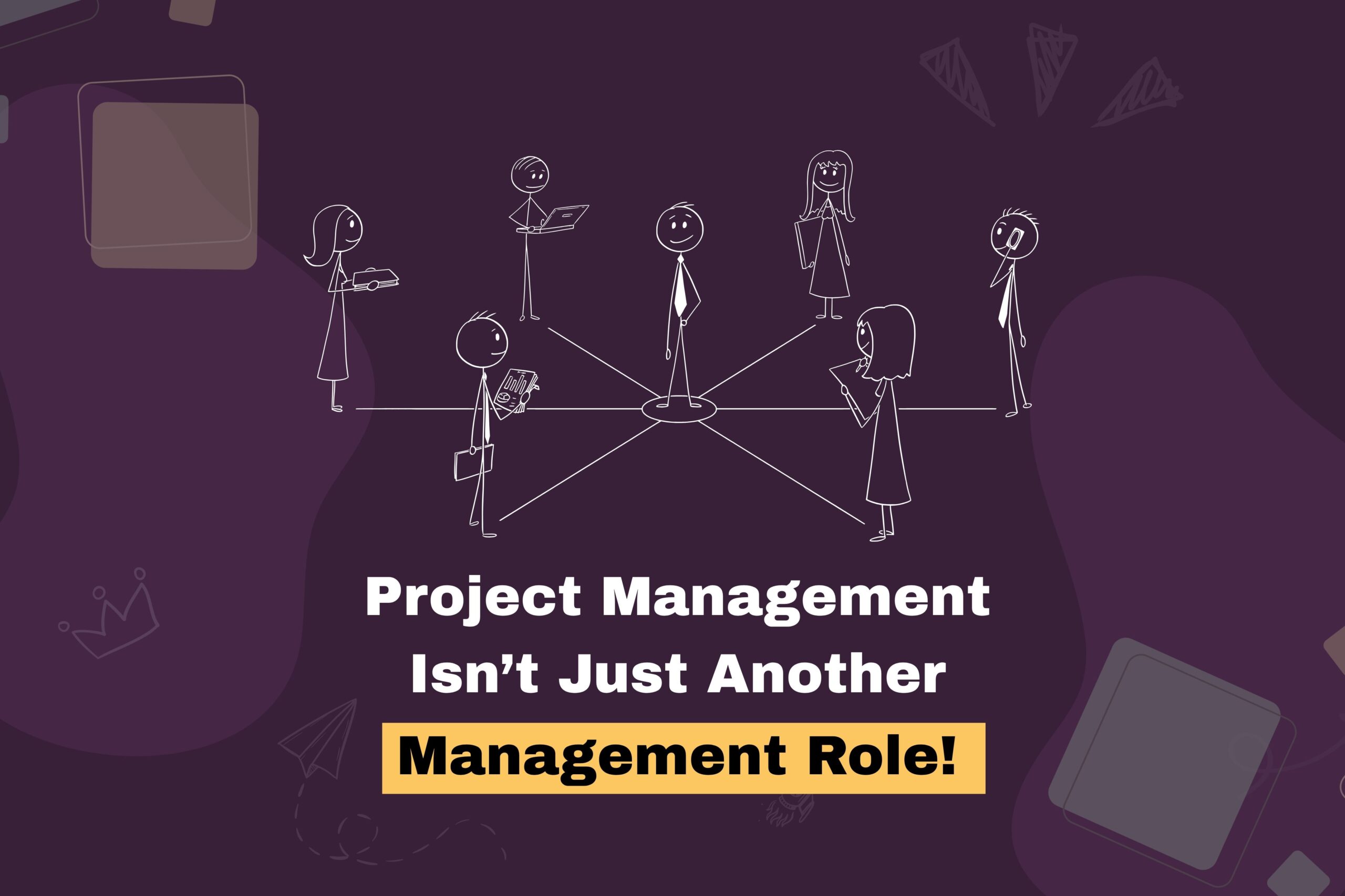
Project management is horizontal. PMs coordinate across every function:
- Talking to design about UX
- Syncing with dev teams on progress
- Checking with QA on test cycles
- Informing marketing about launch
- Updating clients and leadership
“They are the only role that connects everyone — and keeps the whole thing moving forward.”
Without them? You get assumptions, delays, and drama.
5. Project Success = PM Success
Here is the ultimate difference:
A PM is not judged by how well they “manage people.” They’re judged on whether the project was:
- Delivered on time
- Within budget
- As per agreed scope
- Without major chaos
Their scorecard is black and white: Did it ship? Did it work?
It’s not about who’s more important — it’s about the type of problem being solved.
If you want to grow a strong team or build repeatable systems, you need great operations or HR leaders. But if you want to deliver something new — something complex, high-stakes, and cross-functional you need a project manager.
Because when the mission matters, someone has to own the outcome.
And that someone is the Project Manager.