Now Reading: Building a Scalable Delivery Engine: A Practical Guide for Operations Leaders
-
01
Building a Scalable Delivery Engine: A Practical Guide for Operations Leaders

Building a Scalable Delivery Engine: A Practical Guide for Operations Leaders
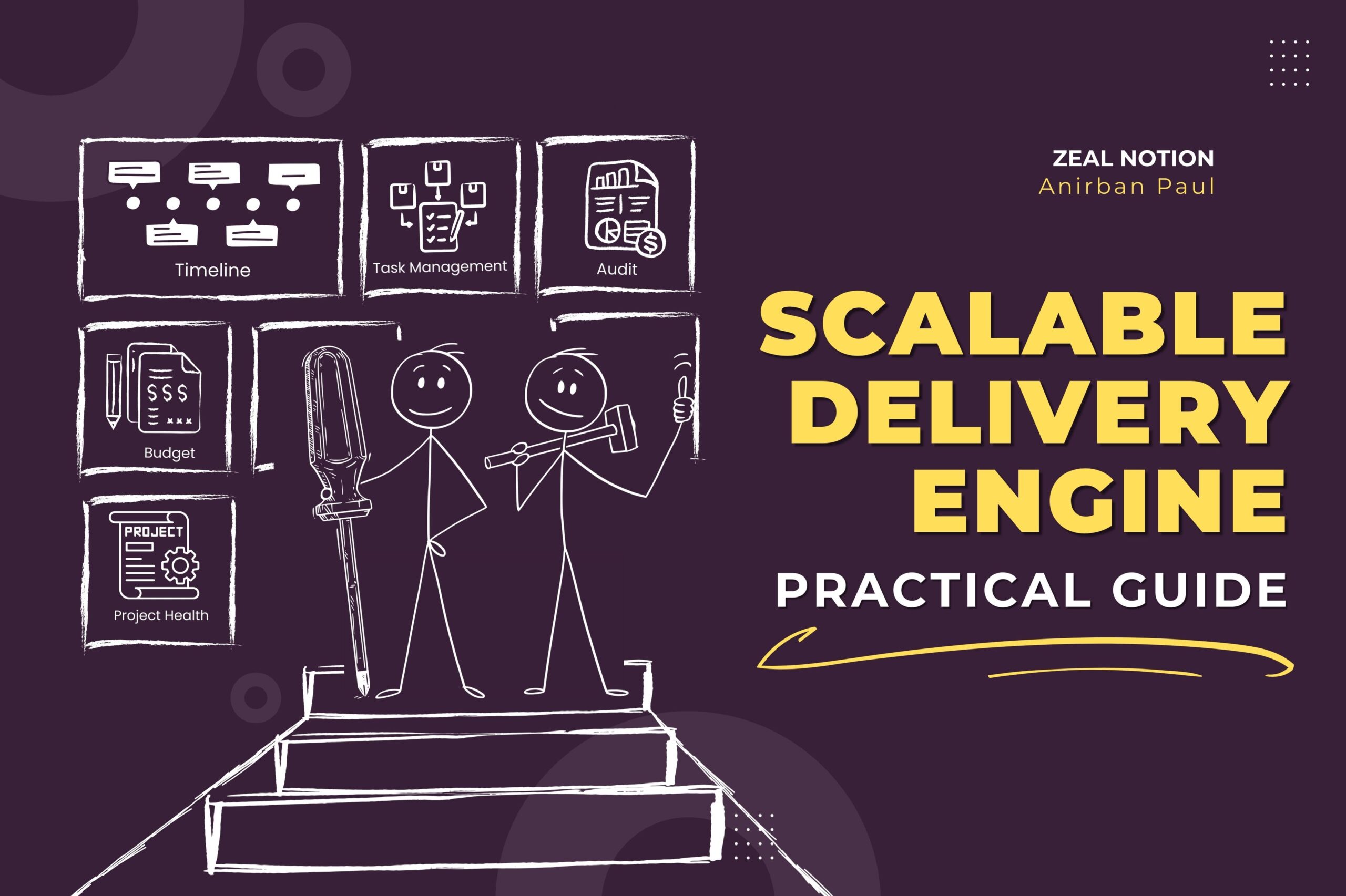
If you’re leading operations in a growing company, you know how hard it is to keep delivery on track while scaling. The secret? Don’t just fix problems, build systems. In this guide, I will walk you through the exact steps I follow to establish a strong delivery foundation that scales. In 1 month’s time you won’t be just delivering projects you will have enough data to improve and scale your system.
Objective: Build a Strong Operational Foundation for Scalable Delivery
We’ll break this down into four key responsibilities. For each task, you’ll find the exact “how to do it” instructions based on what actually works in real teams.
Key Responsibility 1: Complete Operational Audit of All Active Projects and Teams (within 15 days)
Purpose: Get a clear picture of how things are running so you can identify issues and opportunities for improvement.
Task 1: Schedule 1:1s with PMs, Tech Leads, and QA Leads
How to do it:
- Create a list of all ongoing projects and their key leads
- Use a shared calendar tool (like Calendly or Google Calendar) to block 30–45 mins per session
- Prepare a standard agenda: current blockers, team structure, delivery health, known risks
- Ask open-ended questions: “What’s working well?” “Where are you stuck?”
Task 2: Review timelines, blockers, and current delivery status
How to do it:
- Request the latest timelines or Gantt charts from PMs
- Look for overdue milestones, tasks without owners, and dependency delays
- Use any tools to analyze task status
- Highlight patterns, where delivery is consistently slow?
Task 3: Assess team structure, responsibilities, and bandwidth
How to do it:
- Create a matrix of roles vs. responsibilities for each project
- Identify duplication of effort, unassigned tasks, or overloaded individuals
- Use time tracking or workload reports
Task 4: Compile findings into a project health report
How to do it:
- Create a slide deck summarizing:
- Project health (Red/Yellow/Green)
- Key issues and blockers
- Gaps in resources or structure
- Quick wins + major risks
- Share with leadership and relevant teams to create alignment
Key Responsibility 2: Design and Implement a Standardized Delivery Process (by end of month)
Purpose: Build a predictable and repeatable process from start to finish.
Task 1: Identify key delivery stages
How to do it:
- Define the 6–7 stages every project should go through (e.g., Requirement → Design → Dev → QA → UAT → Deployment)
- Interview team leads to validate whether these are accurate and complete
- Use a visual flowchart to outline the stages
Task 2: Define templates and checklists for each stage
How to do it:
- Create a checklist for each stage: what inputs are needed, who owns what, exit criteria
- Build these into your PM tool as reusable templates or wikis
- Examples: Requirement doc template, UAT checklist, QA signoff criteria
Task 3: Align with Tech/PM leads and get feedback
How to do it:
- Host a working session to walk through your proposed delivery process
- Ask for edge cases or exceptions that may not fit
- Document objections and adapt where needed
Task 4: Train all teams on the new delivery framework
How to do it:
- Host a 1-hour live training or recorded walkthrough
- Share docs/templates in a shared drive or wiki
- Create a “cheat sheet” PDF to reinforce key steps
Task 5: Roll out to all new projects
How to do it:
- Make the new process mandatory for new initiatives
- Assign a process lead to oversee early adoption
- Collect feedback and make minor adjustments as needed
Key Responsibility 3: Select and Deploy Two Key Tools (for PM and Communication)
Purpose: Give your team centralized, reliable tools for managing work and staying aligned.
Task 1: Identify gaps
How to do it:
- List current tools in use across teams
- Survey team members to understand what’s missing (e.g., real-time updates, task ownership, async comms)
- Look for pain points like double work or missed updates
Task 2: Shortlist tools
How to do it:
- Research 3–4 tools for each category (project mgmt + comms)
- Compare pricing, integrations, usability, and team fit
- Examples: PM → ClickUp, Jira, Notion. Comms → Slack, MS Teams.
Note: If budget is a problem use google sheet for project management keeping it in mind that in near future you will move all data to PM tools. Else it will be difficult to manage all projects and it will consume most of your time updating things.
Task 3: Run a 1-week pilot with the team
How to do it:
- Select a test project and a small team
- Ask the team to log all tasks and communicate only within the tools
- Track adoption, ease of use, and any blockers
Task 4: Finalize and implement across all teams
How to do it:
- Choose based on pilot feedback
- Create a rollout plan (by team, by week)
- Set up permissions, folders, templates in advance
Task 5: Train teams and assign tool admins
How to do it:
- Host onboarding sessions
- Assign tool admins for ongoing support and troubleshooting
- Set clear expectations: where tasks go, where comms happen, who updates what
Key Responsibility 4: Document SOPs for Top 5 Recurring Delivery Activities
Purpose: Reduce delays, confusion, and miscommunication in high-impact, repeatable workflows.
Task 1: List top 5 activities causing confusion or delays
How to do it:
- Analyze past project post-mortems or audit findings
- Identify repeated friction points (e.g., kickoffs, QA handoffs, UAT chaos)
- Prioritize based on frequency and impact
Task 2: Draft process flow for each
How to do it:
- Write out a step-by-step guide for each activity
- Include roles, inputs/outputs, tools used, and timing
- Keep it under 1 page per activity for readability
Task 3: Review with relevant stakeholders
How to do it:
- Share drafts with the people actually doing the work
- Ask: “Is this accurate?” “What’s missing?” “What would make it easier to follow?”
- Revise based on real input
Task 4: Store in central wiki or tool
How to do it:
- Use a platform like Notion, Confluence, or internal shared drive
- Organize SOPs by category or project phase
- Add version control if needed
Task 5: Share with team and schedule training
How to do it:
- Announce new SOPs in team meetings or Slack
- Schedule short walkthroughs (15–30 mins) for each SOP
- Include SOPs as part of onboarding for new team members
Task 6: Create a communication plan
How to do it:
- Set up periodic reminders to revisit SOPs
- Assign owners for each SOP to keep them updated
- Include a feedback loop for teams to suggest updates
This framework isn’t theory. It’s something I use every day to make delivery smoother, scalable, and more predictable. The key is not doing everything at once but taking focused action in each area.
Start with an audit. Then roll out your delivery process. Pick your tools wisely. And document what matters most.
You’ll go from firefighting to forward planning and your teams will thank you.