Now Reading: Strategies to Manage Conflict and ensure team harmony
-
01
Strategies to Manage Conflict and ensure team harmony

Strategies to Manage Conflict and ensure team harmony
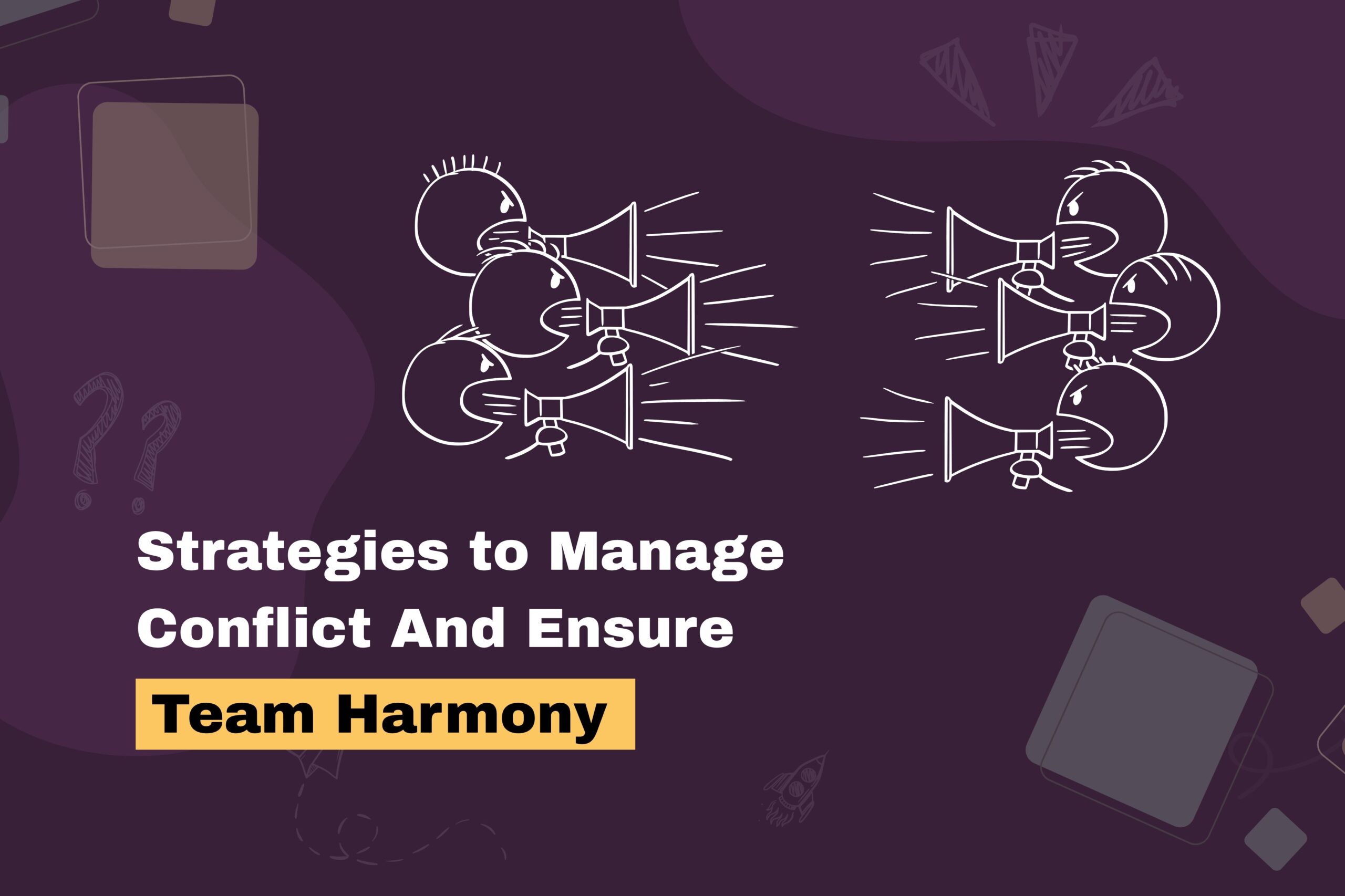
Every team, no matter how skilled or well intentioned, will face conflict. It is not a question of “if,” but “when.” And in high-pressure environments, tight deadlines, changing priorities, cross-functional collaboration tensions rise quickly.
Handled poorly, conflict drains energy, breaks trust, and derails progress. But handled well? It becomes fuel for stronger collaboration and better results.
In this blog, we’ll explore practical strategies to manage team conflict and restore harmony backed by trusted models like the Thomas-Kilmann framework, Psychological Safety theory, and more. Each is paired with real examples to help you apply them right away.
1. Normalize Conflict as a Growth Signal
Don’t treat conflict as a red flag, it’s a sign that your team cares and is engaging deeply. The problem isn’t disagreement itself, it’s how we deal with it.
Set the tone early. At project kickoff, communicate that respectful disagreement is not just accepted, it’s expected.
A startup product team introduced a “Challenge with Respect” norm during sprint planning. Engineers and designers were encouraged to critique ideas, not individuals. Debates became sharper and less personal.
Thomas-Kilmann Conflict Mode Instrument (TKI), understand how team members approach conflict (e.g., Avoiding, Competing, Collaborating) to facilitate more productive dynamics.
2. Create Psychological Safety for Honest Conversations
People avoid raising conflict when they fear rejection, embarrassment, or punishment. That silence is dangerous, it lets tension build beneath the surface.
Build psychological safety by modeling vulnerability, inviting feedback, and showing appreciation when people speak up.
A tech lead ended every retro by asking: “What’s one thing I missed this week?” Over time, team members began surfacing blockers and friction points earlier without fear.
Psychological Safety by Dr. Amy Edmondson, teams that feel safe to speak up are more effective, adaptive, and resilient.
3. Address Issues Early Before They Escalate
Most conflicts don’t explode overnight, they boil over time. The earlier you catch friction, the easier it is to solve.
Use retrospectives and 1:1s to ask:
- “Is there anything frustrating you right now?”
- “Is something slowing you down?”
A cross-functional team kept stumbling during handoffs. A simple “What is not working?” retro exercise revealed misaligned expectations between dev and QA. Once understood it got fixed with a 30-minute sync.
Five Dysfunctions of a Team by Patrick Lencioni, fear of conflict and lack of trust are two key dysfunctions that leaders must actively resolve.
4. Focus on Interests, Not Positions
When people argue, they often lock into rigid positions (“We must use this tool”). But behind every position is a deeper need or value.
Ask: “What are we trying to protect or achieve?” Move from arguing over solutions to uncovering shared goals.
Two engineers fought over using React vs. Vue for a rebuild. The PM asked, “What are each of you optimizing for?” The answer: team maintainability vs. speed to market. They agreed on a hybrid rollout strategy.
Interest-Based Relational Approach (IBR), developed to shift conversations from winning an argument to preserving relationships and solving underlying needs.
5. Clarify Roles to Reduce Friction
Ambiguity breeds tension. When people are not sure who is responsible for what, tasks fall through the cracks or get duplicated.
Define clear roles at the start of any project using a RACI matrix (Responsible, Accountable, Consulted, Informed).
A content and product team clashed over who owned release messaging. Once a RACI table was created, it was clear the product provided technical inputs, but content had final sign-off. Conflict disappeared.
RACI Matrix, A proven tool for clarifying responsibilities and reducing overlapping efforts.
6. Stay Neutral, But Don’t Stay Silent
As a PM or leader, you are the facilitator not the judge. But neutrality doesn’t mean inaction.
When tension flares, meet people 1:1, listen to both sides, and bring them back to the shared goal.
In a marketing vs design deadline standoff, the PM hosted a short sync focused on “What’s our shared launch objective?” That realignment led to a joint compromise and restored momentum.
Crucial Conversations Framework, helps leaders stay focused on results while managing high-stakes, emotionally charged dialogue.
7. Use Nonviolent Communication (NVC) to Reduce Blame
People shut down when they feel judged or blamed. The NVC method helps express frustration clearly without triggering defensiveness.
Use this 4-step format:
- Observation: “When the brief changes without discussion…”
- Feeling: “I feel confused…”
- Need: “Because I need clarity to work efficiently…”
- Request: “Could we agree to sync before major changes?”
A designer used NVC in a tense planning call: “When copy gets updated last-minute, I feel anxious because I need time to adjust layout. Can we agree to lock changes 24 hours before handoff?” The tone shifted from blame to collaboration.
Nonviolent Communication (by Marshall Rosenberg), a powerful way to express needs without creating defensiveness.
Conflict Managed = Culture Strengthened
The strongest teams aren’t conflict-free, they are conflict-ready. They have the tools, trust, and structure to turn tough moments into growth.
So whether you’re a PM, founder, or team lead, your job isn’t to keep everyone “happy”, it’s to build a space where honesty fuels harmony and disagreement leads to better outcomes.